
Choosing the right harness size is one of the most important things you can do for your dog’s comfort, safety and confidence on walks. A harness that’s too tight can cause rubbing and restrict movement. Too loose, and your dog could slip out — especially if they get spooked.
At Happy Paws and Friends, this matters even more to us because Luna, our Romanian rescue, has an unusual body shape — slim neck, deep chest — which made finding the right fit a real challenge. Once you know how to measure properly, everything becomes much easier.
Here’s exactly how to do it.
What You’ll Need
- A soft tape measure (cloth is best)
- Your dog standing upright
- A few treats to keep them still
- A pen or phone to note the measurements
If you don’t have a tape measure, you can use string and measure it against a ruler afterwards.
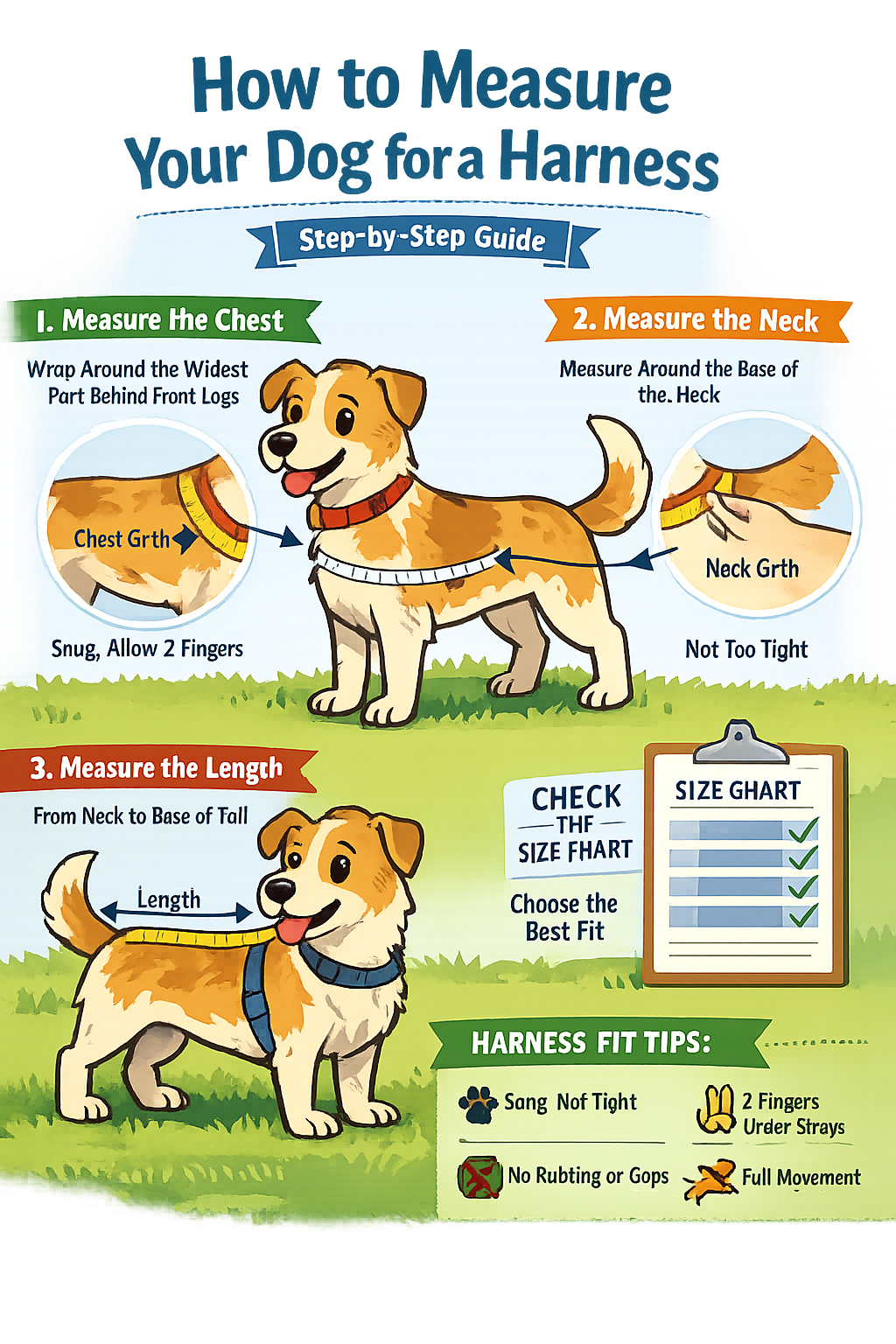
Step 1: Measure the Chest (Most Important)
The chest girth is the key measurement for almost all harnesses.
How to measure:
- Wrap the tape measure around the widest part of your dog’s chest
- This is usually just behind the front legs
- Make sure it’s snug but not tight
- You should be able to fit two fingers underneath
This measurement determines the main harness size.
Step 2: Measure the Neck
Some harness styles also rely on neck size.
How to measure:
- Measure around the base of the neck (where a collar naturally sits)
- Not too high under the chin
- Not too low on the shoulders
Again, allow room for two fingers.
Step 3: Check the Weight (Optional but Helpful)
Weight isn’t as accurate as measurements, but it helps confirm sizing.
Always prioritise chest measurement over weight.
Step 4: Compare with the Size Guide
Every brand is slightly different, so always compare your dog’s measurements with the specific harness size chart.
If your dog is between sizes:
Usually choose the larger size, especially if the harness is adjustable.
How a Harness Should Fit
A correctly fitted harness should:
- Sit snugly without rubbing
- Allow full shoulder movement
- Not restrict breathing
- Not twist to the side
- Not allow your dog to back out
You should always be able to fit two fingers underneath.
Signs the Harness is the Wrong Size
Too small:
- Rubbing under the legs
- Restricted movement
- Reluctance to walk
Too big:
- Harness twisting
- Gaps around chest
- Dog slipping out
Special Considerations for Rescue Dogs
Many rescue dogs, like Luna, can be more sensitive to how a harness feels.
A well-fitted harness can:
- Increase their confidence
- Reduce anxiety on walks
- Prevent escape
- Help them feel secure
Final Tip: Re-check Every Few Months
Dogs’ bodies change over time.
Weight, muscle and coat thickness all affect fit.
Check measurements regularly, especially for:
- Puppies
- Young dogs
- Dogs gaining or losing weight
Finding the Perfect Fit
Taking two minutes to measure properly can make the difference between stressful walks and enjoyable ones.
A good harness doesn’t just improve safety — it improves your dog’s happiness.
Just ask Luna.