
Bird flu (avian influenza) is every bird keeper’s nightmare. It spreads easily, often invisibly, and once inside your aviary it can be devastating. The good news is that strong biosecurity can dramatically reduce your risk.
If you and Nick are caring for injured or recovering birds, prevention becomes even more important because rescue birds may already be vulnerable.
Here’s a practical, UK-relevant guide.
1. Prevent Contact with Wild Birds
Wild birds are the main carriers.
Do this:
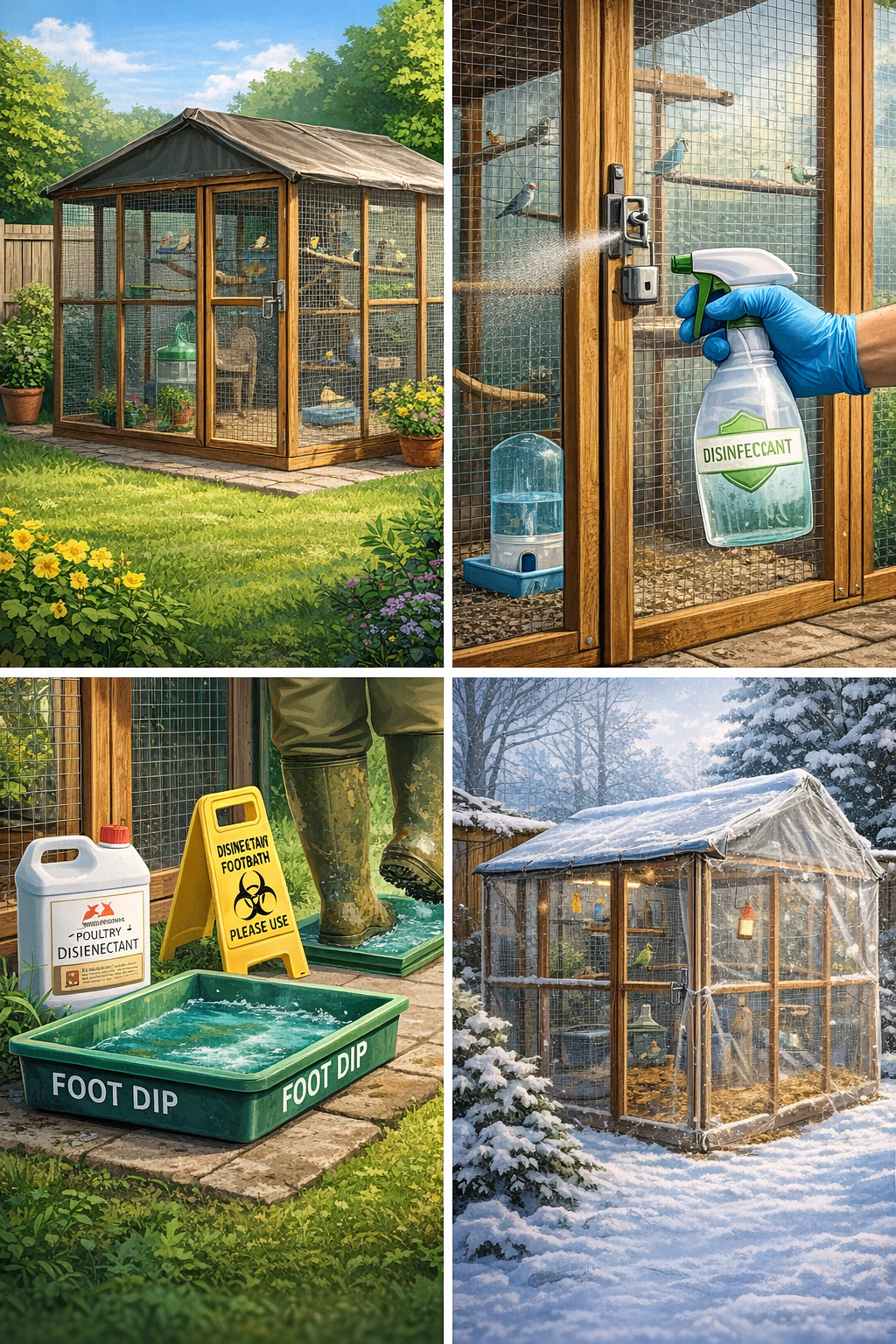
- Cover your aviary roof fully (solid or fine mesh)
- Block small gaps where wild birds could enter
- Prevent wild birds accessing food and water
- Remove fallen food daily
Avoid:
- Open-top aviaries
- Feeding wild birds near your aviary
2. Control Your Feet: Use Disinfectant Footbaths
Your shoes can carry the virus.
Place a foot dip at the entrance containing DEFRA-approved disinfectant such as:
- Virkon S
- F10 disinfectant
- DEFRA-approved poultry disinfectants
Use it every time you enter and leave.
3. Change Clothing and Wash Hands
Have aviary-only shoes and clothing.
Always:
- Wash hands before and after handling birds
- Use hand sanitiser
- Avoid entering after visiting parks, farms, or countryside with waterfowl
4. Keep Food and Water Protected
Contaminated droppings spread infection.
Best practice:
- Use covered feeders
- Use drinkers that wild birds cannot access
- Change water daily
- Clean containers regularly
5. Clean and Disinfect Regularly
Routine cleaning saves lives.
Clean:
- Perches
- Floors
- Feeding stations
- Door handles
Disinfect weekly minimum.
6. Limit Visitors
People can carry the virus on clothing.
Avoid:
- Letting other bird owners enter
- Letting visitors handle birds
If necessary, provide protective shoe covers.
7. Know the Symptoms
Watch for:
- Sudden death
- Lethargy
- Swollen head
- Loss of appetite
- Breathing problems
- Diarrhoea
Some birds show no warning signs.
8. Follow UK Housing Orders
In the UK, during outbreaks, DEFRA may require birds to be housed.
This means:
- Keeping birds covered
- Preventing wild bird contact
Check updates here:
gov.uk → avian influenza
9. Quarantine New or Rescue Birds
Always isolate new birds for minimum 14 days.
Ideally 30 days.
Never introduce immediately.
10. Reduce Your Own Risk Exposure
Avoid visiting:
- Poultry farms
- Bird markets
- Other aviaries
Especially during outbreaks.
Final Thought
Biosecurity isn’t paranoia — it’s protection.
Most outbreaks in aviaries happen because the virus is accidentally carried in on:
- Shoes
- Hands
- Equipment
Not because the aviary itself failed.
With simple routines, your birds can stay safe.